
Compliance

Cybersecurity Risks

Scalability and Performance
Adoption and User Experience

Incorporating Older Systems

Recent Developments Adopted in Fintech Software Development
The rise of new technologies has given birth to new trends that are likely to dictate the future of custom fintech software development. These include the following:




Artificial Intelligence and Machine Learning
Analytics and AI & ML are changing business economics. These technologies are used to conduct predictive analysis, estimate gaps, detect fraud, and make financial suggestions, much better than traditional methods.

Blockchain and Decentralized Finance
Fintech is utilizing blockchain technology because of its security features and the decentralization it offers. DeFi platforms no longer needed traditional financial intermediaries, so transactions are free and secure.
Assisted Customer Service
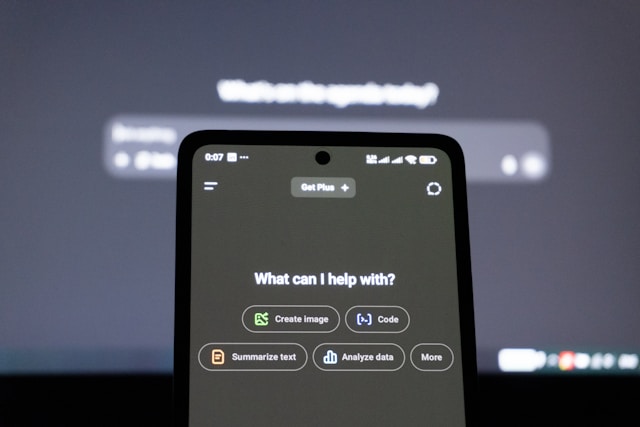
Natural language processing (NLP) enables centralized customer conversations across chat, email, and social channels. Accomplished through voice assistants, chatbots, and automated document analysis. It streamlines compliance reporting.

Our Expertise
Services
End-to-end fintech development services built for security, scale, and real-world performance. Powered by our ReOps framework, we help financial institutions, startups, and digital platforms launch faster, stay compliant, and adapt quickly to market demands

Digital Banking & Fintech App Solutions

Financial Systems & Intelligent Automation

Transaction Infrastructure & Emerging Fintech Technologies

Open Banking & API Ecosystem Development
Embedded Finance & BNPL Solutions
Why Choose Valueans for Fintech Software Development
There are many benefits one can enjoy while working with Valueans in terms of developing fintech software:

Increased Security and Thorough Regulations
Increased Security and Thorough Regulations
Safe transactions, data protection, and regulatory compliance.

Flexibility and Scalability
Flexibility and Scalability
Future-ready and perpetually scalable according to changing market forces.

Focus on Users
Focus on Users
Customer satisfaction and interface enhancement regarding engagement.

Advanced Technologies
Advanced Technologies
AI, blockchain, and big data to ensure business success

Low Code Automation
Low Code Automation
We accelerate delivery with reusable libraries—strengthened through ReOps.

Rapid Market Deployment
Rapid Market Deployment
Get your financial product to market faster.

Dedicated Financial Expertise
Dedicated Financial Expertise
Our team only focuses on finance and tech solutions.

Transparent Pricing Model
Transparent Pricing Model
Clear, upfront costs with no hidden fees or surprises.
Case Studies

Digital Wallet Solution for Global Payment Providers
With Valueans’ help, a global payment firm was able to build a digital wallet that supports different currencies, performs transactions in real time, and connects to many financial service institutions. Enhanced transaction speed and sophisticated security blockchain technology.

AI-Powered Risk Assessment for Fintech Startup
As one of the fintech startups, you’ve teamed up with Valueans to develop an AI-based tool for risk assessment that scrutinizes financial transactions and, in real time, detects fraudulent activities. This modernization eliminated 40% of fraud and increased the confidence of the clients.

Blockchain-Based Smart Contract Platform
Valueans designed and developed a blockchain based smart contract platform that automated the conclusion of financial contracts and other agreements, which cut the processing time from weeks to minutes. This invention fostered greater operational efficiency and lower costs.
Start Off with Valueans Now!
Do you wish to modernize your financial services with revolutionary fintech solutions? Work with Valueans for custom, secure, and innovative fintech software development. Our experts will accompany you on the whole journey from consultation to deployment and maintenance. Reach out to us today so we can strategize your fintech project. This is your chance to take the first step toward digital transformation!

Support
Frequently Asked Questions
Fintech development cost depends on scope, compliance requirements, and integrations. A payment gateway or lending MVP typically ranges from $15K–$35K at fixed price. A full digital banking platform with KYC, AML, and core banking integration starts at $50K+. We provide fixed-price quotes after a free discovery call — no hourly billing, no surprise invoices.
A tightly scoped fintech MVP takes 8–16 weeks using our ReOps Framework with 50,000+ pre-built components. Compliance-heavy projects (full KYC/AML, PCI DSS certification, core banking integration) take 16–24 weeks. Timeline is defined and fixed before development begins — we don't move goalposts mid-project.
Yes. All fintech products we build are architected for regulatory compliance from day one — not retrofitted. We implement PCI DSS-compliant payment handling, GDPR-ready data storage, AML transaction monitoring hooks, and KYC verification flows. We have shipped compliant fintech products for clients in the US, UK, and GCC markets.
Yes. We integrate with Stripe, Plaid, Dwolla, Galileo, Marqeta, and core banking APIs. For GCC clients, we have experience with local payment gateways and SWIFT/IBAN-based integrations. Our ReOps library includes pre-built connectors for the most common financial APIs — significantly reducing integration time compared to building from scratch.
Yes. White-label fintech platforms — lending-as-a-service, payment processing, digital wallets — are a core use case for us. The ReOps Framework is specifically designed for this: pre-built, tested modules that you brand and launch under your own product name. Most white-label fintech MVPs ship in 8–12 weeks.
All projects include a 30-day post-launch bug warranty. Beyond that, we offer monthly retainer maintenance packages — security patches, dependency updates, and feature additions. Most fintech clients stay on a maintenance retainer given the regulatory update cycles in financial services.